

Southwold
Southwold is located in the county of Suffolk, on the east coast of England, bordering the North Sea.
Southwold and the 1953 North Sea Flood
On the night of 31 January 1953, a devastating storm surge struck Southwold on the Suffolk coast of England. The sea defences failed, flooding Ferry Road and surrounding marshlands, destroying homes and claiming five lives. The floodwaters cut Southwold off from the surrounding area for two days, leaving a lasting mark on the local community.
The disaster remains an important reminder of the vulnerability of coastal communities to extreme weather and flooding. Today, the experiences and lessons of 1953 can help inspire new generations to work together towards a safer, more resilient future for people living alongside the North Sea.
Southwold – Remembering the 1953 North Sea Flood
Located on the Suffolk coast of England, Southwold was severely affected by the devastating North Sea Flood of 31 January 1953. The disaster claimed five local lives and left a lasting mark on the community. Today, the story of the flood is preserved through local history, photographs and personal memories.
Through the “75 Years After the Flood Disaster” initiative and the international programme “The North Sea Connects”, Stichting Blauwe Lijn aims to connect communities on both sides of the North Sea. By sharing historical experiences and engaging young people and local residents, we hope to turn the lessons of the past into inspiration for a safer and more water-resilient future.
The story of Southwold of 1953
On 1th February 1953
outhwold: The Night the Sea Came In – The North Sea Flood of 1953
On the night of 31 January 1953, Southwold, a coastal town in Suffolk, England, was struck by one of the most devastating storm surges in British history. An exceptionally high tide, combined with gale-force northerly winds and a deep depression over the North Sea, drove enormous volumes of water towards the east coast of England.
The breach and the flooding
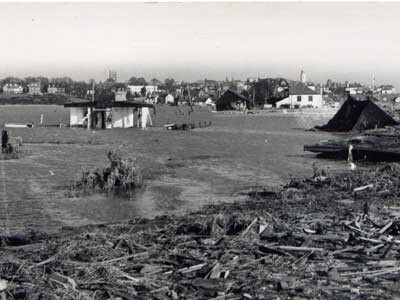
In the early hours of 1 February, the sea defences failed and floodwater swept into the low-lying areas around Southwold Harbour and Ferry Road. Homes were inundated, buildings were severely damaged and the seafront was overwhelmed by the force of the water. The marshes surrounding the town flooded, cutting Southwold off from the surrounding area for approximately two days.
The human tragedy
Five people lost their lives in Southwold. Among the most severely affected areas was Ferry Road, where homes were swept away or badly damaged. The flood left families grieving, residents displaced and a community facing the enormous task of recovering from the destruction.
A lasting legacy
The disaster became a defining moment in Southwold's history. Photographs, eyewitness accounts and personal memories preserve the story of that terrible night. The work of Southwold Museum helps keep these experiences alive, reminding new generations of the vulnerability of coastal communities and the importance of protecting them against flooding.
The 1953 flood remains a powerful reminder that the sea can change lives in a matter of hours. By sharing these stories across generations and borders, we can learn from the past and work together towards a safer, more resilient future for communities along the North Sea.
Impact and Recovery
The human toll
The 1953 North Sea Flood had a devastating impact on Southwold and the surrounding coastal communities. Five people lost their lives in Southwold, while homes and infrastructure were severely damaged. The disaster left families grieving and residents facing an uncertain future.
Evacuation and recovery
Flooding left parts of Southwold isolated for approximately two days, making access and assistance difficult. In the aftermath, the community faced the enormous task of repairing damaged homes, restoring infrastructure and rebuilding everyday life. The disaster also highlighted the need for stronger coastal defences and better preparation for future storm surges.
Remembering the disaster
The events of 1953 remain part of Southwold's local history, preserved through photographs, historical records and personal memories. By keeping these stories alive, the community can pass the experiences and lessons of the disaster on to younger generations.
Remembering the past is not only about honouring those who lost their lives. It is also about strengthening community resilience and encouraging people to work together towards a safer future for coastal communities along the North Sea.
Names of the victims of Southwold
The names of all five victims have not yet been conclusively verified in the historical sources available to us. However, records indicate that among those who lost their lives were a mother and her young son, who died at the Blue Posts bungalow on Ferry Road.
For a complete and verified list of the victims' names, we recommend contacting the Southwold Museum and Historical Society, which preserves historical photographs, archival material and eyewitness accounts of the 1953 flood.
Further information: Southwold Museum – The 1953 Floods
| Name | Surname | Gender | Born in | |
| 1 | ||||
| 2 | ||||
| 3 | ||||
| 4 | ||||
| 5 |
bron: internet
Books, papers and documents about Southwold
Schools in Southwold
Churches in Southwold
Aanmelden voor nieuwsbrief
Vult u onderstaande gegevens in om u in te schrijven voor onze nieuwsbrief.
Contact
Secretariaat
Stichting Blauwe Lijn
p.a. Nieuweweg 1
3251 AS Stellendam
info@stichtingblauwelijn.nl
www.stichtingblauwelijn.nl
© POWERED BY STUDIO SANDRA VOS